New Zealand FTS Update 2026: What Bangladeshi Students Need to Know About the Funds Transfer Scheme
By PEC Education Consultants | Last updated: 17 November 2026 | Sources: Immigration New Zealand (INZ), ANZ and BNZ announcements
If you have spent any time in Facebook groups or YouTube comment sections about studying in New Zealand, you have probably seen the same worried question again and again: do I have to open an ANZ account and lock my money into the New Zealand Funds Transfer Scheme 2026 before I get my student visa? Some posts say yes. Some say it is optional. A few even claim it is now open to every country.
The real answer is more specific, and it matters, because a wrong assumption can cost you weeks of preparation or even a refusal. This guide explains the New Zealand Funds Transfer Scheme 2026 in plain language, covers the latest New Zealand FTS update 2026, tells you exactly where Bangladesh stands today, and shows what you actually need to prepare in BDT, with deadlines and visa steps.
Quick answer: the New Zealand Funds Transfer Scheme 2026 in 60 seconds
- The Funds Transfer Scheme (FTS) is an Immigration New Zealand (INZ) scheme that lets some students move their living-cost money into a New Zealand savings account and receive it in monthly instalments.
- Latest update: on 7 October 2026, Bank of New Zealand (BNZ) joined ANZ as a provider. BNZ serves university and polytechnic students only.
- INZ’s current FTS page lists students from China, India, Nepal, the Philippines, Sri Lanka and Vietnam as eligible. Bangladesh is not on that list as of 17 November 2026.
- If you are applying from Bangladesh, you should plan to prove your money with normal evidence such as bank statements, fixed deposits, a scholarship letter or a financial undertaking, unless INZ tells you otherwise.
- The living-cost figure is NZD 20,000 a year, which is roughly BDT 14 lakh at an exchange rate of about 70 taka per NZD.
What is the New Zealand Funds Transfer Scheme 2026?

The New Zealand Funds Transfer Scheme 2026 is not a new visa and it is not a scholarship. It is a banking arrangement that sits inside the student visa process. INZ designed it so that officers can be sure an applicant’s money is real, available and not borrowed for a day just to look good on paper.
Here is how it works in simple terms. You transfer the required living-cost funds into a dedicated FTS savings account in New Zealand. Once you arrive and activate your accounts, the bank sends a set amount into your everyday account every month. That keeps the rest of your money safely in the savings account until it is due.
A few points are worth remembering:
- INZ decides who must use it. You do not simply choose the scheme; INZ tells you if it applies to your application.
- It covers living costs, not tuition. Tuition fees are paid separately to your education provider.
- It does not guarantee a visa. INZ is clear that opening an account and using the scheme does not mean your student visa will be approved.
- Monthly release is capped. For example, a deposit of NZD 20,000 for a 12-month period allows a maximum automatic payment of NZD 1,666 a month, and NZD 17,000 allows NZD 1,416.
New Zealand FTS update 2026: BNZ joins ANZ
The biggest New Zealand FTS update 2026 came on 7 October 2026, when INZ announced that BNZ had joined the scheme. Until then, ANZ was the only bank involved. Now there are two names to know in the ANZ and BNZ Funds Transfer Scheme.
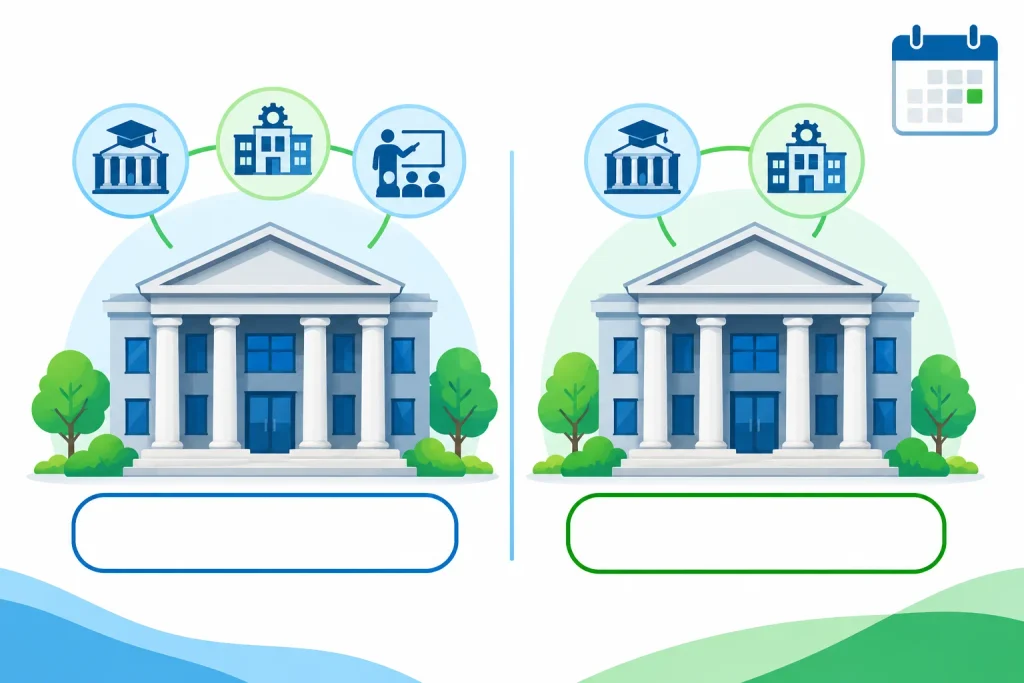
| ANZ | BNZ | |
|---|---|---|
| Available to | Students at universities, polytechnics and private training establishments (PTEs) | Students at universities and polytechnics only |
| Role | Original FTS provider | New provider from October 2026 |
| Choice for you | Yes, if you study at a university or polytechnic and INZ requires FTS | Yes, same condition |
Two practical tips if you are ever asked to use the scheme. First, apply to only one provider, not both. Second, compare each bank’s instructions, timelines and any charges on its official FTS page before you choose, because the transfer steps differ slightly.
A word of caution: you may see blog posts claiming that FTS has been expanded to “all international students worldwide” in 2026. INZ’s own pages still describe it as available to students from certain countries, and the BNZ announcement repeated the same six-country list. Always trust the INZ page, not a headline.
Funds Transfer Scheme for Bangladeshi students: are you eligible?
This is the question behind most searches for Funds Transfer Scheme for Bangladeshi students, so let us answer it directly.
According to INZ’s student fund requirements page, the FTS is a secure way for students from China, India, Nepal, the Philippines, Sri Lanka and Vietnam to transfer the money they need. Bangladesh is not named. That means a Bangladeshi applicant should not assume an FTS account is available, required or a shortcut to approval.
What does this mean in real life?
- Do not pay anyone for an “FTS account in Bangladesh”. If a person promises a special FTS route for Bangladeshi students, ask for the INZ page that says so. You will not find one today.
- Prepare standard proof of funds. INZ still needs convincing evidence that your money exists, belongs to you or your sponsor, and will be available in New Zealand.
- Watch your approval in principle (AIP) letter. INZ says it will let you know if you must use the FTS. Policies can change, so we monitor the page regularly for our students.
This is also why the New Zealand student visa Bangladesh 2026 process feels more demanding than it looks on paper. Without a scheme that verifies the funds for you, the quality of your own documents carries more weight. Our analysis of why many applications fail is in New Zealand Student Visa Refusal 2026: Why Bangladeshi Students Are Being Rejected.
New Zealand student visa financial requirements (with BDT figures)
The New Zealand student visa financial requirements are set by INZ and are the same whether or not you use the FTS. Conversions below use an approximate rate of NZD 1 = BDT 70. Recent mid-market rates have moved between about 69.5 and 72, so check the live rate on the day you transfer money.

| Requirement | Amount in NZD | Approx. amount in BDT |
|---|---|---|
| Living costs, tertiary or English study of 1 year or more | 20,000 per year | about 14.0 lakh |
| Living costs, study shorter than 1 year | 1,667 per month | about 1.17 lakh per month |
| Living costs, school students (Years 1 to 13), 1 year or more | 17,000 per year | about 11.9 lakh |
| Maternity costs, if pregnant (extra) | 9,000 | about 6.3 lakh |
| Student visa fee (typical online fee) | about 850 | about 59,500 |
| Outward travel | A paid ticket out of New Zealand, or enough extra money to buy one | Depends on fares |
Important: tuition is separate. INZ expects you to show that you have paid your tuition for one year or one programme (whichever is shorter), or that you have the money for it if you use the approval in principle option. Your living-cost evidence must also be genuinely available after tuition is paid. Prepaid accommodation, for example to a homestay provider, can be deducted from the living-cost amount.
For a wider budgeting picture across countries, see PEC’s guide to study abroad cost from Bangladesh 2027.
New Zealand student visa bank statement requirements

Since Bangladeshi applicants usually rely on their own documents, getting the New Zealand student visa bank statement requirements right is the single most useful thing you can do. INZ’s guidance points to the following:
- Bank statements must show the account holder’s name and the last 3 months of transaction history.
- Fixed-term deposit certificates should show the deposit has been held for at least 3 months.
- A scholarship award letter counts as primary evidence of funds.
- An education loan needs both a disbursal letter and a sanction letter from a nationalised or multi-national bank, with security against fixed assets that belong to you, and details of the security, moratorium period, interest and repayments.
- Provident fund evidence is accepted if the money can actually be withdrawn.
Explaining large or recent deposits
INZ may ask for secondary evidence. If your account shows deposits above NZD 2,000 (about BDT 1.4 lakh), or many smaller deposits, be ready to explain where the money came from and attach proof. If the account is new, show the source of the transfer. Useful documents can include:
- your most recent tax return showing income
- your latest payslip or a letter from your employer
- a business registration document and recent business tax returns
- evidence of rental property ownership and income
If a document is not in English, provide a complete translation as INZ’s document rules require.
If your parents or relatives are paying
Two legitimate routes exist:
- Sponsorship: an individual sponsor must be a New Zealand citizen or resident and a family member or friend. An organisation must be registered in New Zealand.
- Financial undertaking: a guarantor outside New Zealand, such as a parent in Bangladesh, completes the Financial Undertaking for a Student form (INZ 1014). They must show they can afford to support you with their own money, not loaned money, using bank statements from the previous 3 months or by having their bank complete Section E of the form.
For most Bangladeshi families, the financial undertaking is the route to understand first.
Mistakes that cause trouble
- Moving a big lump sum into the account a few days before applying
- Using a screenshot of a bank transfer as tuition evidence, which INZ does not accept
- Submitting a receipt from an education agent instead of one from your education provider
- Inconsistent names, dates or income stories across documents
See also our breakdown of student visa refusal reasons for Bangladeshi students.
How much should a Bangladeshi student budget in total?
The New Zealand Funds Transfer Scheme 2026 only deals with living costs, so here is how the whole first-year picture can look. Tuition varies widely by provider and programme, so the two examples below are illustrations only. Confirm your exact fee on your offer of place.
| Item | Example A (NZD 30,000 tuition) | Example B (NZD 40,000 tuition) |
|---|---|---|
| Tuition (about) | BDT 21.0 lakh | BDT 28.0 lakh |
| Living-cost funds (NZD 20,000) | BDT 14.0 lakh | BDT 14.0 lakh |
| Visa fee (about NZD 850) | BDT 0.6 lakh | BDT 0.6 lakh |
| Estimated total | about BDT 35.6 lakh | about BDT 42.6 lakh |
Add to this your air ticket, medical and police certificate costs if INZ requires them, IELTS or other English test fees, and document translation. Scholarships and tuition discounts can change this picture a lot, which is why the next section matters.
Scholarships can make your funds proof easier
A scholarship award letter is accepted by INZ as primary funds evidence, and a tuition discount lowers the amount you must pay up front. New Zealand universities offer merit-based awards for international students, and some government-funded scholarships exist for eligible countries, so check each programme’s eligibility carefully. Timing matters because many awards close before the main admission deadline. Start with PEC’s overview of study abroad scholarships for Bangladeshi students.
Deadlines and timeline: when to start for the next intake
Deadlines in the student visa process are tighter than most families expect.
- AIP deadlines: if you apply from outside New Zealand and choose to pay tuition after your visa is approved in principle, the usual deadline is 10 days, or 15 days if the FTS applies. Ask your Immigration Officer for an extension as early as possible if you need it. Missing the deadline will likely lead to a decline.
- Processing time: recent published figures from advisers suggest a decision can take roughly 8 to 10 weeks for many applicants. Check INZ’s processing times page before you plan travel.
- February 2027 intake: several university deadlines have already passed, so confirm with each provider whether places remain.
- July 2027 intake: this is the realistic target for most students starting now.
A simple backwards plan for July 2027:
- November to December 2026: shortlist courses, prepare English test, gather academic documents.
- January to March 2027: submit university applications and scholarship forms.
- March to April 2027: accept the offer, arrange tuition payment or AIP route, organise funds documents and a guarantor form if needed.
- April to May 2027: file the visa application with every document and explanation ready.
- June 2027: respond quickly to any INZ request, finalise travel.
Step-by-step: New Zealand student visa process for Bangladeshi applicants
- Choose a course and provider. Pick an NZQA-approved provider. If you want a pathway toward work or residence, look at the Green List courses to study in New Zealand.
- Get an offer of place. Your offer will state tuition and the course length.
- Prepare funds evidence. Use the checklist above, including explanations for large deposits.
- Prepare identity, English and health documents. Passport, academic records, English test result and health or police certificates as required.
- Apply online through Immigration Online. Upload documents and pay the fee, about NZD 850.
- Pay tuition or follow the AIP route. Keep the provider’s official receipt.
- Respond to INZ requests quickly. Any gap in your explanation can slow the case.
- Receive your decision and plan travel. Confirm accommodation and outward travel evidence.
PEC’s longer walkthrough is available in New Zealand student visa process for Bangladeshi students.
If INZ ever asks you to use the New Zealand Funds Transfer Scheme 2026
Policy can change, and some of our readers also have relatives or friends from eligible countries, so here is the process in outline:
- INZ tells you that FTS applies, normally in your approval in principle letter.
- You apply to your chosen provider, ANZ or BNZ. The bank contacts you within about 3 business days for any extra information.
- You transfer the required funds into the FTS savings account, following that bank’s instructions.
- The bank confirms to INZ that the funds have arrived.
- After you arrive in New Zealand and activate your accounts, monthly payments move to your everyday account.
Keep your records tidy, because your funds must come from a source you can explain.
How PEC Education Consultants helps Bangladeshi students
The New Zealand Funds Transfer Scheme 2026 is only one piece of a much larger application. PEC Education Consultants, a Dhaka-based overseas education consultancy working with students since 2016, supports you from the first shortlist to the visa decision:
- University admission and application. We match your academic profile, budget and career goals with New Zealand universities and polytechnics, check entry requirements, and prepare your statement of purpose and documents. Explore Study in New Zealand with PEC, our guide to the best universities for Bangladeshi students and our partner universities.
- Scholarship application. We identify awards you may qualify for, track deadlines and help you present your achievements clearly.
- Study visa processing and guidance. We review your bank statements, explain large deposits, prepare guarantor documents, check consistency across files and guide you through the Immigration Online application.
- Financial documentation guidance. We tell you honestly whether the FTS is relevant to your case, so you never spend money on an account or a service you do not need.
- Country comparison. Not sure whether New Zealand is right? Read New Zealand vs Australia for Bangladeshi students.
Learn more about our team on the About PEC Education Consultants page, then book a counselling session before you pay any application or account fee.
FAQs
Is the Funds Transfer Scheme mandatory for a New Zealand student visa?
Only if INZ tells you it applies to your application. The scheme is limited to certain countries, and Bangladesh is not on INZ’s current list.
Can Bangladeshi students use the New Zealand Funds Transfer Scheme 2026?
Not according to INZ’s published list as of 17 November 2026. Check your approval in principle letter and INZ’s official page for changes.
What is the difference between ANZ and BNZ under the scheme?
ANZ serves students at universities, polytechnics and private training establishments. BNZ, which joined in October 2026, serves university and polytechnic students only.
How much money do I need to show in BDT?
For tertiary study of one year or more, NZD 20,000 per year, roughly BDT 14 lakh at about 70 taka per NZD, plus tuition and your visa fee.
Do I need three months of bank statements?
INZ’s guidance asks for the last 3 months of transaction history showing the account holder’s name, and fixed deposits held for at least 3 months.
Does a scholarship count as proof of funds?
Yes. A scholarship award letter is accepted as primary funds evidence.
Final thoughts
The New Zealand Funds Transfer Scheme 2026 is real, it is changing with BNZ now on board, and it is useful for the students it covers. But for Bangladeshi applicants the smart approach is simple: do not chase an FTS account that INZ has not offered, and put your energy into clean bank statements, a clear source of funds and early planning. If you want a second pair of eyes on your documents, PEC Education Consultants is ready to help with admission, scholarships and visa preparation.
Official sources: INZ Funds Transfer Scheme and INZ Student fund requirements.
Disclaimer: Immigration rules, fees and exchange rates change often. This article is general guidance, not legal or immigration advice. Always confirm current requirements with Immigration New Zealand before you apply.