How to Study in USA from Bangladesh: A Step-by-Step Guide from TOEFL and I-20 to the F-1 Visa
If you are wondering how to study in USA from Bangladesh, the path is easier to follow than it looks. It runs through six stages: choose a university, take an English test, apply and get admitted, receive your I-20 form, pay the SEVIS fee and complete the DS-160, then attend your visa interview in Dhaka.
This guide covers each stage in order, with deadlines, costs in Bangladeshi taka and the mistakes that commonly cause problems. It is written for students and parents who want a straight answer on how to study in USA from Bangladesh without guesswork.
Want help with any stage? PEC Education Consultants offers free initial consultancy from its Mirpur, Dhaka office. Book an appointment here.
Why Bangladeshi Students Choose the USA
The USA offers an unusually wide range of choices. There are thousands of accredited institutions, from community colleges to large research universities. Programs are flexible, you can change majors in many undergraduate degrees, and subjects such as computer science, engineering, business analytics and health sciences have strong research and industry links.
Many Bangladeshi students also like that the US system lets them start at a lower cost. A common route is two years at a community college, then a transfer to a four-year university. For a general overview of programs, see PEC’s Study in USA page.
Study in USA for Bangladeshi students is not guaranteed or cheap, but it is manageable with early planning. That is why the rest of this guide leans on timelines and numbers.
Step 1: Understand the Timeline (Start 12 Months Ahead)
The biggest mistake students make is starting too late. Here is a realistic calendar for the main intake:
| Target intake | Start preparing | Take English test by | Apply by | Visa interview |
|---|---|---|---|---|
| Fall (August–September) | 10–12 months before | 6–8 months before | Nov–Feb for most schools (some rolling) | May–July |
| Spring (January) | 8–9 months before | 5–6 months before | Aug–Oct | Oct–Dec |
Deadlines differ by school and program, so always check each university’s own admissions page. If you are reading this in late 2026, Fall 2027 is the realistic target for most applicants. Many Spring 2027 deadlines are closing or have passed, although some universities with rolling admission may still accept applications.
Under current rules, you can generally receive your visa up to a year before the program starts, but you can only enter the USA about 30 days before the start date. Visa appointment waits in Dhaka vary by season, so book as soon as your documents are ready.
Step 2: Choose the Right University and Program
Pick on three things: academic fit, total cost and visa-friendliness. Ask yourself:
- Is the program accredited and the school approved to issue I-20s? Only SEVP-certified schools can.
- Does the school offer international scholarships or tuition waivers?
- What is the location’s cost of living? New York and California cost much more than Texas or the Midwest.
- If you plan a STEM degree, is the program on the STEM-designated list for extended work training?
Browse PEC’s partner universities and subject pages for Computer Science & IT, Engineering and Business Management to see typical options. PEC’s overseas university admission service matches your profile to schools that fit your budget and goals.
Step 3: Take an English Test (TOEFL for USA Universities and Alternatives)
Most universities require proof of English ability. TOEFL for USA universities is the most familiar option, and most US schools also accept IELTS, and many accept PTE Academic or the Duolingo English Test.
Typical minimums:
- Undergraduate: often 70–80 on the TOEFL iBT (or IELTS 6.0–6.5)
- Graduate: often 80–100 on the TOEFL iBT (or IELTS 6.5–7.0)
- Top-ranked programs: often higher
ETS changed the TOEFL iBT scoring and format in early 2026, so check each university’s published requirement and how it converts scores before you register. Some schools waive the English test if you studied in English-medium schools, for example some A-level or IB students, but you must confirm this with each school.
Budget about ৳24,000–30,000 (roughly US$200–250) for the test fee, plus score reports. Confirm the current fee on the official test website.
Test-prep options: PEC runs its own English test preparation center, which lists IELTS and PTE Academic coaching. If you specifically want TOEFL, ask PEC’s counselors during your free consultation how they can support you or which tests your target schools accept.
Step 4: Prepare Your University Applications
Most US applications ask for:
- Academic transcripts and certificates (SSC/HSC, or A-levels, or your bachelor’s degree)
- English test score
- Statement of purpose or personal essay
- 1–3 recommendation letters
- Resume (usually for graduate applicants)
- Passport copy
- GRE/GMAT or SAT/ACT where required (many schools are test-optional, but check)
- Application fee, usually US$50–100 per school (about ৳6,000–12,000)
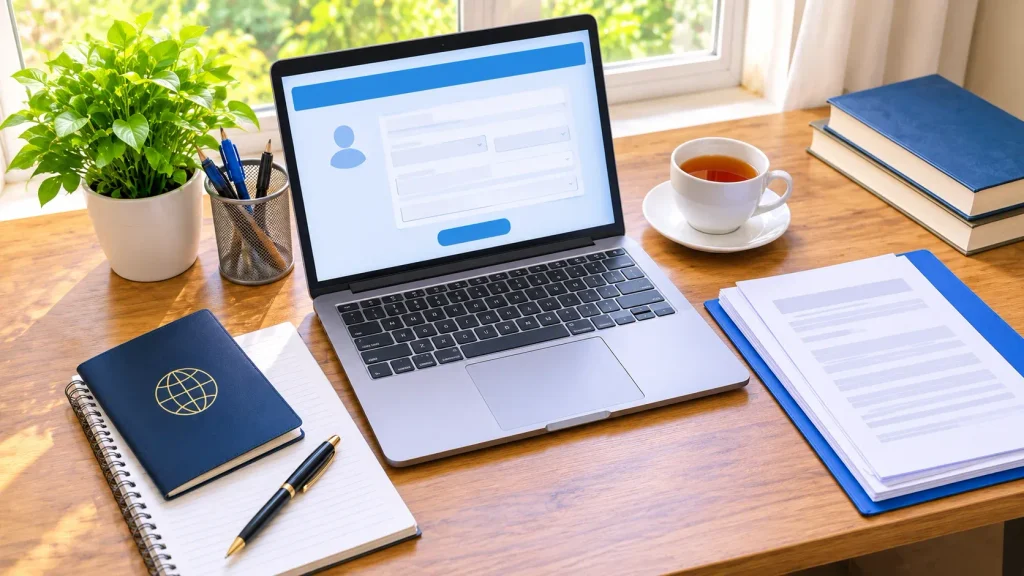
A smart strategy is to apply to 6–8 schools: 2 ambitious, 3 realistic and 2–3 safe. Spread your applications across public and private universities and across cost levels.
PEC’s admission team helps with shortlisting, essay review, document checking and submission. Because the consultancy is free at the start, you can ask questions before committing to anything.
Step 5: Apply for Scholarships
Many students assume US funding is only for toppers. In reality, scholarships in USA for Bangladeshi students often come from the universities themselves as merit awards, partial tuition waivers, graduate assistantships and departmental funding.
Common types:
- Merit scholarships: granted automatically or on application, often based on GPA and test scores
- Graduate assistantships: research or teaching roles that can reduce tuition and sometimes provide a stipend (mostly for master’s and PhD)
- Country or program-specific awards: these vary each year, so verify eligibility directly
- Outside scholarships: foundations and organizations, which are highly competitive
Be careful with websites promising “100% guaranteed scholarship.” Real awards depend on the school, the program and the year. Read PEC’s guide to the 15 best scholarships in USA and the main scholarships and waivers page for current options.
Apply early. Many scholarship deadlines match or come before admission deadlines, and funding runs out on a rolling basis.
Step 6: Understand the Cost of Studying in USA (in BDT)

The cost of studying in USA is the question that worries families most, so here are realistic ranges. They are estimates at about ৳122 per US$1 and they vary by school, city and lifestyle.
| Expense (per year) | USD | Approx. BDT |
|---|---|---|
| Community college tuition | $8,000–15,000 | ৳9.8–18.3 lakh |
| Public university tuition (international) | $20,000–35,000 | ৳24.4–42.7 lakh |
| Private university tuition | $30,000–60,000 | ৳36.6–73.2 lakh |
| Living costs (housing, food, transport, insurance) | $12,000–25,000 | ৳14.6–30.5 lakh |
| Realistic total per year | $25,000–65,000 | ৳30–80 lakh |
One-time visa-related costs:
| Fee | USD | Approx. BDT |
|---|---|---|
| SEVIS I-901 fee | $350 | ৳42,700 |
| MRV visa application fee | $185 | ৳22,600 |
| Confirmed total | $535 | ≈ ৳65,300 |
| Possible visa integrity fee (check first) | $250 | ≈ ৳30,500 |
The visa integrity fee was created by a 2025 law. As of October 2026, no official payment procedure had been published for it. Check the US Embassy Dhaka and travel.state.gov websites before you pay anything beyond the SEVIS and MRV fees.
Tips to lower your costs:
- Start at a community college and transfer.
- Choose universities offering merit aid.
- Choose lower cost-of-living states.
- Apply for assistantships if you are a graduate student.
- Understand that F-1 students can generally work on campus only, up to about 20 hours a week during term, so don’t plan to fund the degree through part-time work.
Step 7: Receive Your I-20 Form
The I-20 form (Certificate of Eligibility for Nonimmigrant Student Status) is the document your university issues after admission and after you prove you can pay for your first year. You cannot apply for the F-1 visa without it.
To get it, you usually need to show funds covering first-year tuition plus living costs, as listed on the university’s own cost estimate. Accepted proof often includes:
- Bank statements and balance certificates (generally several months of history)
- Sponsor’s income documents such as salary certificates and tax returns
- Scholarship letters
- Education loan sanction letters
Check your I-20 carefully. Your name, date of birth, program and start date must match your passport and admission letter. Errors are easier to fix before the interview. You will need to sign it, and it will carry your SEVIS ID, which you need for the next step.
PEC also offers free banking support to help prepare financial documents correctly, an area where many applications go wrong.
Step 8: Pay the SEVIS Fee
The SEVIS fee is a US government fee for the student tracking system. It is US$350 for F-1 students (about ৳42,700), and you pay it online at fmjfee.com using your SEVIS ID and I-20 details.
Pay it a few days before your interview and print the receipt. You must bring proof of payment. Use a card with international transactions enabled, and ask your bank about limits in advance.
Step 9: Complete the DS-160 and Book Your Interview
The DS-160 is the online nonimmigrant visa application form, filled in on the official CEAC website. Keep these points in mind:
- Answers must match your passport, I-20 and bank documents exactly.
- You must list the social media usernames you used in the last five years. The embassy has warned that leaving them out can lead to denial and future ineligibility.
- The embassy asks F, M and J applicants to set their social media accounts to public so that vetting can take place. Review your old posts with that in mind.
- Save your confirmation page with the barcode.
Then create your profile on the official appointment website for Bangladesh (ustraveldocs.com/bd), pay the MRV fee, and schedule your slot at the US Embassy Dhaka student visa section in Baridhara. Appointment availability changes through the year, with busy periods before the August and January intakes, so check the wait-time tool on travel.state.gov.
Step 10: USA Student Visa Requirements and the F-1 Visa from Bangladesh
Here is the full list of USA student visa requirements to bring to your interview in Dhaka:
- Valid passport (and old passports)
- Signed I-20 form
- DS-160 confirmation page
- SEVIS fee receipt
- MRV fee receipt and appointment confirmation
- Passport-size photographs meeting US specifications
- Admission letter and, if applicable, scholarship letter
- English test score report and academic transcripts
- Financial documents: bank statements, sponsor letters, income and tax proof, loan papers
- Any other proof that supports your plans and your ties to Bangladesh
The F-1 visa from Bangladesh is granted under a rule that requires you to show you do not intend to stay permanently in the USA. A consular officer decides this in a short conversation, often only a few minutes. Expect questions on:
- Why this university and program?
- Why the USA rather than Bangladesh?
- Who is paying, and what do they do for a living?
- What are your plans after graduation?
- What ties do you have to Bangladesh (family, property, career prospects)?
Interview tips:
- Keep answers short, honest and consistent with your documents.
- Know your own study plan, your sponsor’s income and the cost of your program without reading from notes.
- Never submit false or purchased documents. A fraud finding can ban you for life.
- If you are refused, ask what was unsatisfactory and reapply only when something meaningful has changed.
For deeper preparation, read PEC’s F-1 visa interview guide and consider a mock interview through its study visa support service.

Step 11: After the F-1 Visa from Bangladesh
Once approved, you will usually receive your passport with the USA F-1 Visa by courier. Then:
- Confirm your enrollment and housing with the university.
- Buy health insurance if the school requires it.
- Book flights. You cannot enter more than about 30 days before your program start date.
- Attend your orientation and keep your I-20 safe.
How PEC Education Consultants Helps You Study in the USA
Many families look for study abroad consultants in Bangladesh because the process involves many moving parts. PEC Education Consultants, based in Mirpur, Dhaka and operating since 2016, supports students at every stage:
- University admission and application: shortlisting, document checks, essays and submission through the overseas university admission service.
- Scholarship search and application: identifying waivers and awards you may qualify for, as outlined on the scholarships page.
- English test guidance: access to English test preparation.
- I-20 and financial documents: help organizing proof of funds with banking support.
- Study visa processing and guidance: DS-160 review, document checking and interview preparation via study visa support.
PEC states that it provides free consultancy and that it does not charge hidden fees. Ask for the fee structure in writing at your first meeting, as you should with any consultant. A trustworthy consultant will explain your chances honestly, will never promise a visa, and will never ask you to fake documents.
FAQs
How long does it take to study in USA from Bangladesh, from starting to flying?
Plan 10–12 months for a Fall intake, covering the English test, applications, admission, I-20 and visa.
Can I study in USA after HSC?
Yes. Many students apply for bachelor’s programs after HSC or A-levels, often starting at a community college.
How much bank balance is needed for an F-1 visa from Bangladesh?
There is no single fixed amount. You need enough to cover the first year’s costs on your I-20, and ideally a credible plan to cover the later years.
Is IELTS accepted instead of TOEFL for USA Universities?
Most US universities accept IELTS, but confirm with each school.
Is Bangladesh affected by US entry restrictions for student visas?
Bangladesh was not on the restricted-entry list that took effect on 1 January 2026, and F-1 interviews continue at the US Embassy in Dhaka. Policies can change, so confirm on the embassy website before you book.
Can I work while studying?
F-1 students can generally work on campus for up to about 20 hours a week during term. Off-campus work needs specific authorization.
What is the DS-160 form for a F-1 visa from Bangladesh?
The DS-160 is the online US nonimmigrant visa application. You complete it yourself, list your social media handles from the last five years, and keep the confirmation page.
Where can I find scholarships in USA for Bangladeshi students?
Start with merit scholarships and tuition waivers from the universities you apply to. Graduate students can also seek assistantships. Apply early, as funds often run out.
What is the average cost of studying in USA in BDT?
Roughly ৳20–70 lakh per year, including tuition and living costs. Community colleges and public universities usually cost less than private ones.
How early should I book my US embassy Dhaka student visa interview?
Book once your I-20 is issued and the SEVIS fee, MRV fee and DS-160 are done. Waits vary by season, so check travel.state.gov and plan ahead for August and January intakes.
Do I need study abroad consultants in Bangladesh to apply to US universities?
You can apply on your own, but a reliable consultant can help with shortlisting, documents and visa prep. Ask for fees in writing and avoid anyone promising a guaranteed visa.
Final Thoughts: Your Roadmap
Here is how to study in USA from Bangladesh in one line: choose the right school, prove your English, get admitted, secure your I-20 form, pay the SEVIS fee, file the DS-160, and prepare honestly for your interview in Dhaka. Start early and budget realistically.
Ready for a personal plan? Contact PEC Education Consultants, 767 West Kazipara, Mirpur, Dhaka-1216, or call +880-1713 167969. Book your free consultation.
Disclaimer: Fees, test rules, visa policies and exchange rates change often. Always confirm details with the US Embassy Dhaka, travel.state.gov, ETS and your chosen university before you apply or pay.