Study in Canada from Bangladesh: Total Cost for Bachelor’s and Master’s Students
Every year, thousands of Bangladeshi students search the same question: “How much does it really cost to study in Canada from Bangladesh?” The honest answer is that it depends on your degree, province, city and lifestyle. Most families still underestimate the total, because they only look at tuition.
This guide gives you realistic 2026 numbers in Canadian dollars (CAD) and Bangladeshi Taka (BDT). It also covers the funds you must show for the visa, and the smart ways to bring the bill down.
Exchange rate used in this article: about 1 CAD ≈ BDT 88 (recent mid-market rates have ranged roughly from 87 to 89). Rates move daily, so check the current rate before you transfer money.
Quick Answer: How Much Does It Cost to Study in Canada from Bangladesh?
| Level | Typical yearly cost (tuition + living) | Approx. total for the full degree |
|---|---|---|
| Bachelor’s (4 years) | CAD 45,000 – 75,000 (BDT 40 – 66 lakh) | CAD 180,000 – 280,000 (about BDT 1.6 – 2.5 crore) |
| Master’s (1–2 years) | CAD 38,000 – 65,000 (BDT 33 – 57 lakh) | CAD 45,000 – 120,000 (about BDT 40 lakh – 1.06 crore) |
These are planning estimates, not fixed prices. Engineering, MBA and top-ranked university programs can cost more. Colleges, smaller cities and some Atlantic and Prairie provinces cost less.
Why Students Choose to study in Canada from bangladesh
Canada remains popular for a few practical reasons:
- Degree quality. Canadian universities are highly ranked and respected worldwide.
- Lower cost than the USA or UK. Statistics Canada figures show Canadian tuition for internationals is high, but total cost of studying in Canada for Bangladeshi students often still below comparable US private universities.
- Work rights. Eligible students can work off-campus up to 24 hours a week during classes, and full-time during scheduled breaks.
- Post-study work. Graduates of bachelor’s and master’s degrees may qualify for a Post-Graduation Work Permit (PGWP), which is an open work permit.
- Safe, multicultural cities. Bangladeshi communities in Toronto, Montreal, Winnipeg, Vancouver and other cities make settling in easier.
The rules have tightened since 2024. National caps, higher funds and stricter documentation make early, accurate planning much more important than it used to be.
Part 1: Tuition Fees for Bangladeshi Students in Canada
Bachelor’s tuition
According to Statistics Canada’s 2025/26 data, international undergraduate students pay an average of about CAD 41,746 per year. That is roughly BDT 36.7 lakh. The figure varies a lot by province and program main part of Canada study cost for Bangladeshi students:
- Lower end: about CAD 18,000–25,000, mainly in some Atlantic provinces and at some colleges.
- Mid-range: CAD 30,000–45,000 for many arts, science and business programs.
- High end: CAD 50,000–70,000 for engineering, computer science and other competitive programs at top universities.
Ontario has the highest provincial average for international undergraduates. Newfoundland and Labrador has the lowest cost of studying in Canada for Bangladeshi students.
Master’s tuition
International graduate tuition averages about CAD 24,028 per year (roughly BDT 21.1 lakh), which is far lower than undergraduate rates. In practice:
- Research-based master’s (thesis): often CAD 10,000–25,000, and sometimes funded through assistantships.
- Course-based / professional master’s: CAD 20,000–40,000.
- MBA and specialized professional programs: can exceed CAD 50,000–60,000.
This is why many Bangladeshi graduates find a master’s in Canada more cost-efficient than a bachelor’s.
Part 2: Living Costs in Canada (Rent, Food, Transport)
Living costs depend heavily on the city.
| Expense (monthly, approximate) | Big cities (Toronto, Vancouver) | Smaller cities (Winnipeg, Halifax, Regina, etc.) |
|---|---|---|
| Shared room / basement rent | CAD 900 – 1,500 | CAD 500 – 900 |
| Groceries and food | CAD 300 – 450 | CAD 250 – 400 |
| Transport (student pass) | CAD 50 – 150 | CAD 40 – 100 |
| Phone, internet, misc. | CAD 80 – 150 | CAD 70 – 120 |
Most students spend CAD 1,500–2,300 per month, or about CAD 18,000–28,000 per year (BDT 16–25 lakh). Note that IRCC now expects you to show CAD 23,448 for living costs alone (see Part 4).
Part 3: Hidden and One-Time Costs Most Students Forget
Beyond tuition and rent, budget for these:
- Study permit fee: CAD 150
- Biometrics fee: CAD 85 (so about CAD 235, or roughly BDT 20,700, for government fees)
- University application fees: usually CAD 100–200 per application
- IELTS or other English test fees (and retakes)
- Medical examination by an IRCC-approved panel physician
- Airfare to Canada (budget for at least a one-way ticket, and a return each year if you plan to visit home)
- Health insurance: many provinces and universities require or offer coverage, typically several hundred dollars a year
- Books and supplies: CAD 1,000–1,500 per year
- Winter clothing and first-month setup, including a deposit on rent
- Bank transfer and currency exchange charges when sending funds
Setting aside an extra CAD 3,000–5,000 for first-year settling-in costs is sensible.
Part 4: Proof of Funds for the Canada Study Permit (2026)
This is where many Bangladeshi applicants get refused. It is one of the most important sections to read.
For applications submitted on or after September 1, 2026, a single student outside Quebec must show at least CAD 23,448 for living expenses for the first year. That figure has risen from CAD 22,895 and is adjusted every year. On top of it you must show:
- First-year tuition (the full amount, not just the deposit), and
- Return travel costs.
Quebec has its own financial rules and requires a CAQ (Quebec Acceptance Certificate) before the study permit.
Example: If your first-year tuition is CAD 30,000, you should be prepared to show roughly CAD 30,000 + CAD 23,448 + travel, so about CAD 55,000+ (around BDT 48 lakh). Family members coming with you raise this further.
Accepted ways to show your money
- Bank statements (IRCC generally expects the last four months)
- A GIC (Guaranteed Investment Certificate) from a participating Canadian bank
- Proof that first-year tuition and housing are already paid
- A student or education loan
- A sponsor’s letter with the sponsor’s supporting financial documents
- Proof of a scholarship
The old Student Direct Stream (SDS), which once fast-tracked applicants from countries including Bangladesh, has been discontinued. Students now apply under the regular process. A GIC is still a popular way to show funds clearly, but it is no longer a fast-track requirement.
Tip: Officers look at where the money came from and how long it has been in the account. Sudden large deposits without explanation cause refusals. Prepare a clean paper trail early.
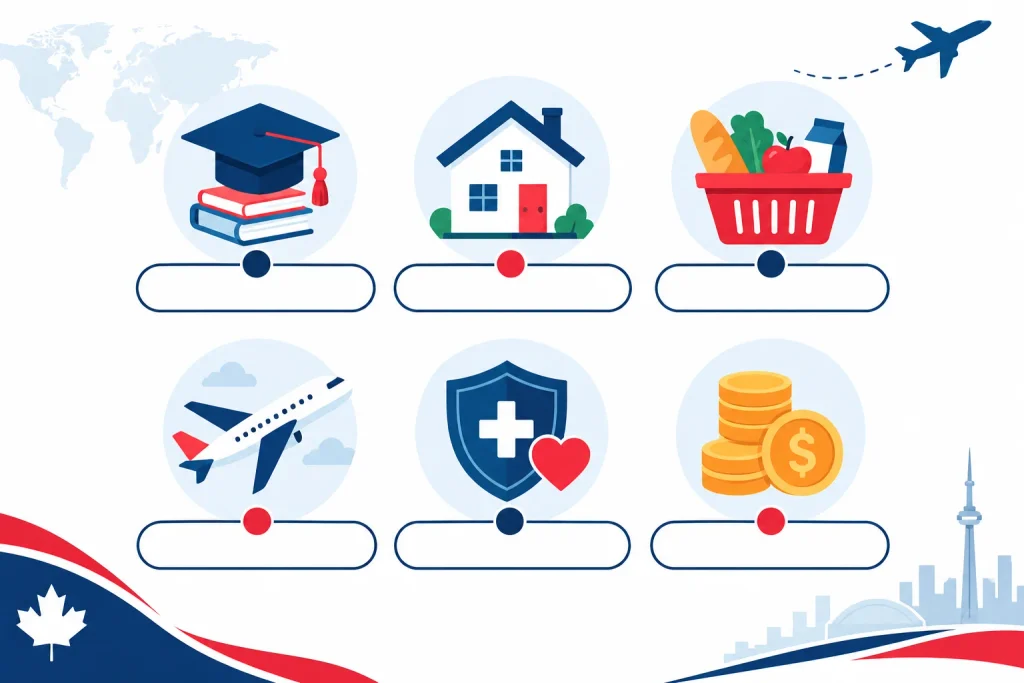
Part 5: Sample Budgets in BDT
Sample Bachelor’s budget (first year, mid-range university)
| Item | CAD | BDT (approx.) |
|---|---|---|
| Tuition | 35,000 | 30.8 lakh |
| Living (rent, food, transport) | 23,448 | 20.6 lakh |
| Health insurance + books | 2,000 | 1.8 lakh |
| One-way/return travel + setup | 3,000 | 2.6 lakh |
| Government and application fees | 700 | 0.6 lakh |
| Total (year one) | ≈ 64,000 | ≈ BDT 56 lakh |
Later years are usually cheaper because the one-time costs fall away, though tuition often rises a little each year. A full four-year degree commonly lands around CAD 180,000–280,000.
Sample Master’s budget (2-year, course-based program)
| Item | CAD (per year) | BDT (approx.) |
|---|---|---|
| Tuition | 22,000 | 19.4 lakh |
| Living | 23,448 | 20.6 lakh |
| Insurance, books, misc. | 2,500 | 2.2 lakh |
| Yearly total | ≈ 48,000 | ≈ BDT 42 lakh |
| Two-year total (plus one-time costs) | ≈ 100,000 | ≈ BDT 88 lakh |
A one-year master’s or a funded thesis program can cut this sharply.
Part 6: Can You Work to Cover Costs?
Yes, but treat work as a support, not a plan. Eligible full-time students can:
- work up to 24 hours a week off-campus during regular academic sessions,
- work full-time during scheduled breaks (summer, winter, reading week), and
- work on campus, which is separate from the off-campus limit.
Working more than the permitted hours is a breach of your study permit conditions and can put your status and future PR plans at risk. Part-time income typically covers part of your rent and food, not tuition. IRCC requires you to prove your funds without counting on Canadian work income.
Part 7: How to Reduce the Cost to Study in Canada from Bangladesh
- Choose your province and city carefully. Rent and tuition in Atlantic and Prairie provinces can be much lower than in Toronto or Vancouver.
- Consider a master’s route. Graduate tuition averages roughly 42% less than undergraduate.
- Compare universities and colleges. Public colleges can cost less, but always check PGWP eligibility (see Part 9).
- Apply for scholarships early. Options include entrance awards at many universities and prestigious awards such as the Lester B. Pearson International Scholarship (University of Toronto) and the UBC International Leader of Tomorrow Award. Competition is strong, and availability and criteria change every year, so verify on each university’s website.
- Look for research assistantships (master’s and PhD). Thesis-based programs often provide funding through supervisors.
- Choose co-op programs. Paid work terms can offset costs and build Canadian experience.
- Share housing and use student transit passes.
- Apply early. Scholarships, housing and PAL allocations fill up.
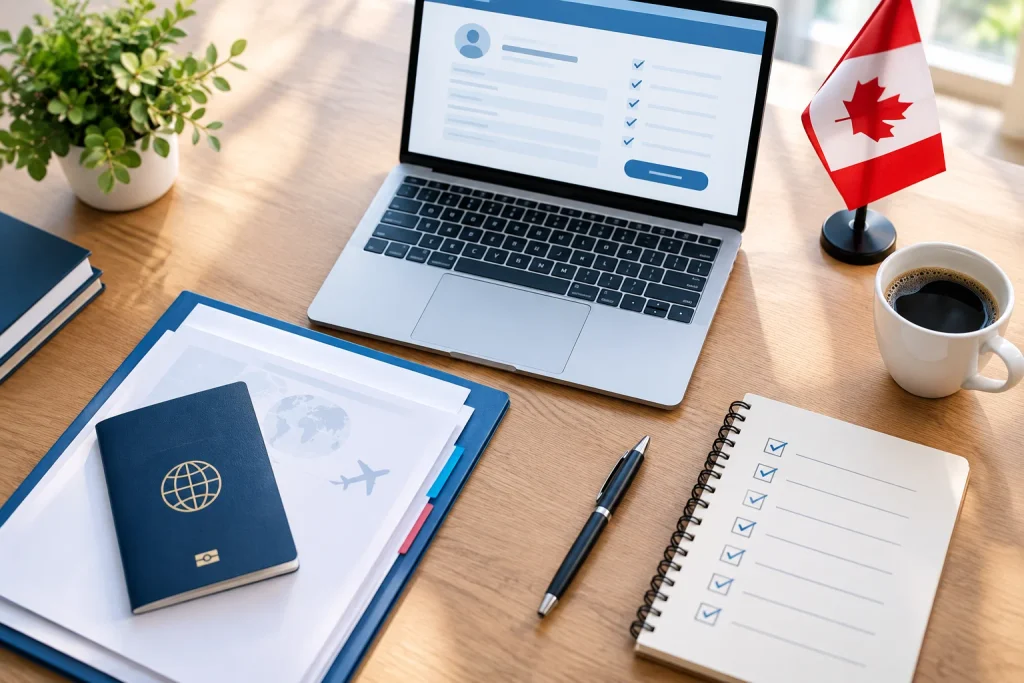
Part 8: The Study Permit Process for Bangladeshi Students
Here is the usual roadmap:
- Shortlist programs based on budget, career goals and PGWP eligibility.
- Prepare your English test. IELTS Academic is widely accepted, and many universities also accept TOEFL, PTE or Duolingo. Requirements vary by university and program.
- Apply to universities and receive a Letter of Acceptance (LOA) from a Designated Learning Institution (DLI).
- Get a PAL/TAL if required. Most bachelor’s and diploma applicants need a Provincial or Territorial Attestation Letter. Since January 1, 2026, master’s and PhD students at public DLIs do not need one.
- Pay tuition or show funds and arrange your GIC if you choose that route.
- Complete your medical exam and biometrics.
- Write a strong Statement of Purpose (SOP) or study plan that clearly explains why this program, why Canada, and your future plans.
- Submit your study permit application online and track it.
- Prepare for arrival: housing, airport pickup, banking, insurance and orientation.
Canada limits the number of study permits it issues. For 2026 the national target is around 408,000 permits. Because of caps, tighter checks and lower approval rates than a few years ago, a well-documented file matters more than ever.
Part 9: Post-Study Work and Return on Investment
Canada’s Post-Graduation Work Permit is a big reason many students go, but the rules are stricter now:
- Bachelor’s, master’s and doctoral graduates are not subject to the field-of-study list, but must show CLB 7 language ability in all four skills (reading, writing, listening, speaking).
- College diploma and certificate graduates generally need CLB 5 and must have studied in an eligible field of study.
- Master’s graduates may qualify for up to three years of PGWP.
- You must apply within 180 days of completing your program.
Choosing a PGWP-eligible program is crucial. Before you pay any deposit, confirm your exact program (not just the institution) is PGWP-eligible. Immigration rules change, so verify everything on the official IRCC website before you commit money.
Part 10: Common Mistakes That Lead to Refusals
- Showing only the minimum funds, or funds with no clear source
- Missing or wrong PAL for bachelor’s or diploma programs
- A weak or copied SOP that doesn’t explain the choice of program
- Choosing a program unrelated to your academic and work background, without an explanation
- Low language scores, or weak documentation of academic gaps
- Submitting inconsistent or unverifiable documents
- Relying on unverified agents who promise guaranteed visas
How PEC Education Consultants Can Help You Study in Canada from bangladesh
Managing admission, funds, scholarships and visa rules at once is stressful, and a small mistake can cost you a full intake. PEC Education Consultants supports students to study in Canada from Bangladesh at every stage:
1. Free profile evaluation and course selection
We review your academic results, English scores, budget and career goals, then suggest realistic universities and programs in the right provinces, including PGWP-eligible options.
2. University admission and application support
We help you prepare and submit applications, arrange documents, meet deadlines and follow up with universities until you receive your Letter of Acceptance.
3. Scholarship application guidance
We identify scholarships and funding you may qualify for, help you prepare strong applications, essays and reference requests, and guide you on assistantships for master’s and PhD applicants. We can’t guarantee scholarships, because awards depend on the universities and on how competitive your profile is.
4. Study visa processing and guidance
We guide you through PAL requirements, proof of funds and GIC options, SOP and study plan writing, document checklists, medical and biometrics steps, and application submission. We also prepare you for follow-up requests from IRCC.
5. Pre-departure support
We advise on accommodation, insurance, banking, budgeting and what to expect on arrival.
Every case is different, and decisions on admission and visas are made by universities and the Canadian government, not by any consultant. What we can do is make sure your application is honest, complete and well presented.
Ready to plan your Canadian study journey? Book a free consultation with PEC Education Consultants: +8801865 383 786/WhatsApp | email:[email protected] | Mirpur, Dhaka, Bangladesh
Frequently Asked Questions
How much money is needed to study in Canada from Bangladesh?
For a bachelor’s degree, budget roughly CAD 45,000–75,000 per year (BDT 40–66 lakh). For a master’s, roughly CAD 38,000–65,000 per year (BDT 33–57 lakh). For the visa itself, you must show first-year tuition plus CAD 23,448 for living costs and travel funds.
What is the minimum bank balance for a Canada study permit in 2026?
IRCC does not set a single bank balance. For a single applicant outside Quebec applying on or after September 1, 2026, you need CAD 23,448 for living expenses, plus first-year tuition and return travel.
Is Canada study cost for Bangladeshi students cheaper for a bachelor’s or a master’s degree?
A master’s is usually cheaper per year and much cheaper in total, because graduate tuition averages far lower and programs are shorter.
Do I need a PAL to study in Canada from Bangladesh as a Bangladeshi student?
Most bachelor’s and diploma applicants do. Master’s and PhD students at public DLIs are exempt since January 1, 2026.
Is IELTS compulsory to study in Canada from Bangladesh?
Most institutions require an English test such as IELTS, though accepted tests and scores vary by university and program. Check each institution’s requirements.
Is the Student Direct Stream (SDS) still available?
No. The SDS has been discontinued, and applicants apply under the regular study permit process.
Can I get a scholarship to study in Canada from Bangladesh?
Yes, but scholarships are competitive. Options include university entrance awards, some prestigious awards, and assistantships for research-based graduate students.
How many hours can I work while studying in Canada?
Eligible students can work up to 24 hours per week off-campus during academic sessions, and full-time during scheduled breaks.
What is the Canada student visa fee from Bangladesh?
The study permit fee is CAD 150 and biometrics are CAD 85, so CAD 235 in total, excluding medical exams, courier and consultancy fees.
Can I stay and work after my degree?
Many graduates qualify for a PGWP, which can last up to three years for eligible programs. You must meet language and program requirements, and rules can change.
Final Thoughts
Study in Canada from Bangladesh is a major financial decision, but with careful planning it can be a smart long-term investment. Focus on the total cost of studying in Canada for Bangladeshi students, not just tuition. Choose a PGWP-eligible program, prepare clear proof of funds, and start early. Whether you want a bachelor’s in a mid-cost province or a research master’s with funding, the right guidance can save you money and stress.
Disclaimer: Fees, exchange rates, funding requirements and immigration rules change frequently. The figures above are estimates based on information available in September 2026. Always confirm current requirements on the official IRCC website and your chosen institution’s website before applying.