Getting admitted to a USA university is a huge milestone — but for most Bangladeshi students, the real nerve-wracking moment comes later, at the visa counter inside the USA Embassy in Dhaka. The entire interview usually lasts no more than two to three minutes, yet it decides whether months of applications, test scores, and paperwork actually translate into a plane ticket.
The good news is that the F1 student visa interview isn’t random. Consular officers ask from a fairly predictable set of question categories, and most refusals happen for the same handful of avoidable reasons. This guide walks you through exactly what to expect at the US Embassy in Dhaka in 2026, the questions officers ask most often, how to answer them convincingly, and the policy changes every Bangladeshi applicant needs to know before appointment day.
A Quick Overview of the F1 Student Visa Interview Process
Before the interview itself, every applicant goes through the same sequence:
- Receive Form I-20 from your US university once you accept your offer.
- Pay the SEVIS I-901 fee (currently USD 350 for F-1 students) through fmjfee.com.
- Complete Form DS-160, the online nonimmigrant visa application, at ceac.state.gov.
- Pay the MRV visa application fee (currently USD 185, roughly BDT 21,000–22,000, depending on the exchange rate), payable through designated EBL branches or EBL Skybanking in Bangladesh.
- Book your interview slot on ustraveldocs.com/bd, choosing your preferred passport pickup location — Dhaka, Chittagong, or Sylhet.
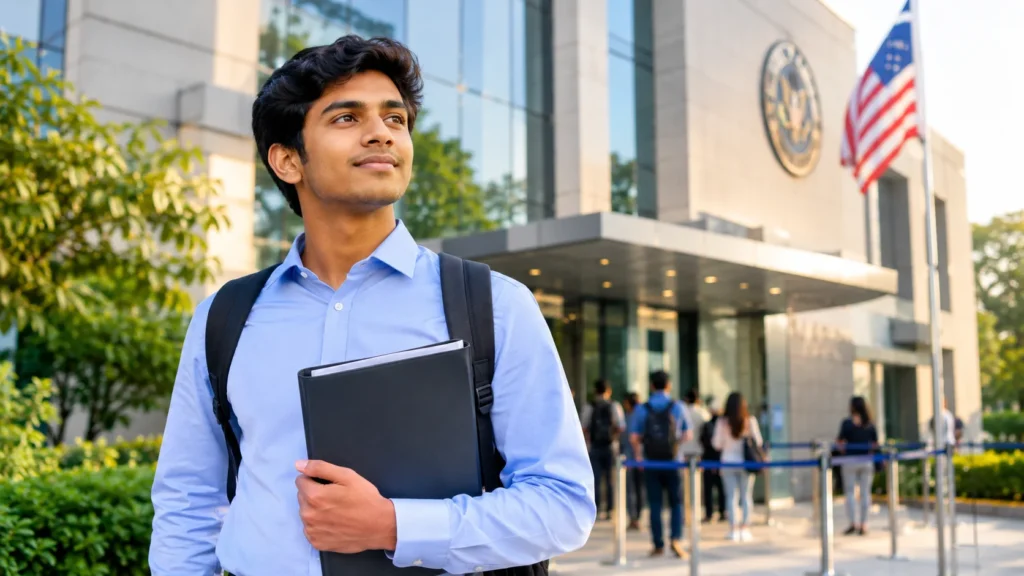
- Attend your F1 student visa interview at the USA embassy Dhaka for visa interview (Madani Avenue, Baridhara).
Appointment wait times for Bangladeshi applicants generally range from a few weeks to a couple of months, with the heaviest demand between May and August ahead of the Fall intake. Since student visa applicants are typically prioritized in the queue, it’s worth booking your slot the moment your I-20 arrives rather than waiting.
2026 Updates Bangladeshi Applicants Must Know
The visa landscape has shifted noticeably over the past year, and a few changes directly affect how you should prepare.
In-person interviews are now mandatory for nearly everyone. The long-standing “dropbox” waiver that once let some renewing applicants skip the interview has been sharply narrowed since late 2025. Today, almost all F-1 applicants — first-timers and renewals alike — must sit through a full consular interview. Build extra time into your travel plans, since this has pushed appointment wait times higher across most embassies, including Dhaka.
Social media screening is part of the process. DS-160 now requires applicants to list their social media handles, and consular officers can review public content as part of your background check. Before your interview, it’s sensible to review your own public posts and remove anything that could be read as contradicting your stated study plans or intent to return home.
Your DS-160 barcode must match your appointment profile exactly. If you update or redo your DS-160 after booking your appointment, the barcode number needs to line up with what’s on file at ustraveldocs.com — mismatches can mean being turned away at the gate before you even reach the interview window.
Broader immigration policy changes generally do not affect F-1 applicants. Bangladesh has not been placed on any list restricting student visa issuance, and separate immigrant (green card) processing pauses that occasionally make headlines apply to a different visa category entirely. Student visa interviews at the Dhaka embassy continue on their normal schedule. That said, policy can shift quickly, so it’s worth checking bd.usembassy.gov shortly before your appointment.
Administrative processing (221(g)) is more common than before. A growing number of applications, including strong ones, get flagged for extra review after the interview. This isn’t a rejection — it just means the case needs more time. Avoid booking flights or resigning from a job until the visa is physically stamped in your passport.
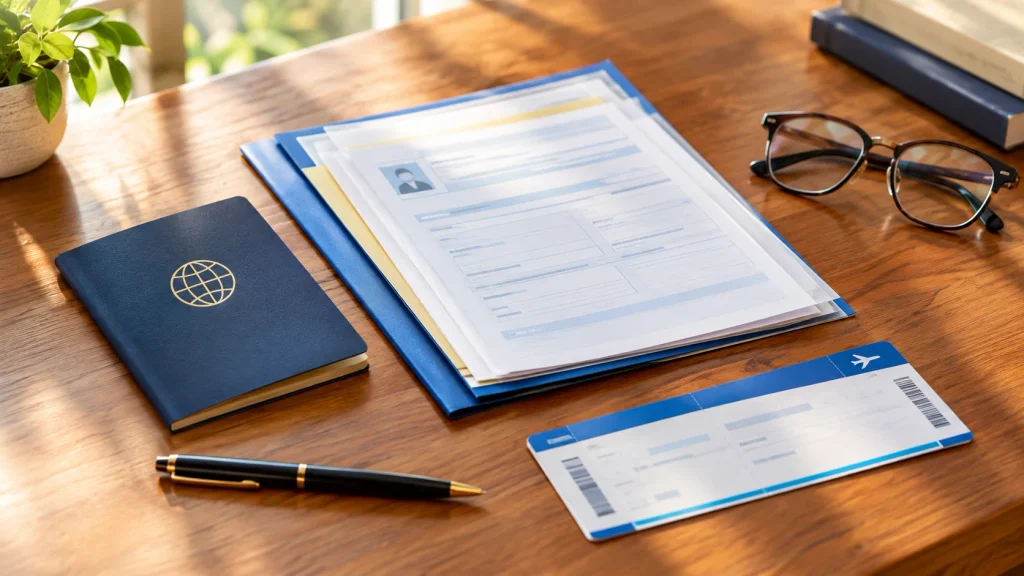
Document Checklist for the USA Embassy Dhaka for Visa Interview
Bring everything on this list, but only hand over what the officer specifically asks for — don’t dump your entire folder on the counter.
Must bring to USA embassy Dhaka for visa interview:
- Valid passport (with at least six months’ validity beyond your intended stay), plus any old passports
- DS-160 confirmation page with the matching barcode
- Interview appointment confirmation from ustraveldocs.com
- MRV fee payment receipt from EBL
- SEVIS I-901 fee receipt
- Signed Form I-20 (signed by both you and your school’s international office)
- A recent passport-sized photo meeting US visa specifications
Good to have ready if asked:
- Admission/acceptance letter from your university
- IELTS, TOEFL, or Duolingo scores
- Academic transcripts and certificates
- Bank statements covering the last six to twelve months
- Sponsor’s income documents and bank statements
- Scholarship or assistantship award letters
- Proof of ties to Bangladesh — property papers, family business documents, a job offer letter
One point specific to Bangladeshi applicants: officers are used to seeing funding built from a mix of sources — family savings, education loans, scholarships, or assistantships — rather than one lump sum. A steady bank balance built up over years looks far more credible than a large deposit made right before the interview.
What Actually Happens on Interview Day
Plan to arrive 15–30 minutes early. Electronics, including phones and laptops, generally aren’t allowed inside the embassy, so arrange somewhere to leave them beforehand. After security screening, you’ll go through a biometric/fingerprint window first, then wait to be called to the actual consular window.
A detail many students don’t realize: officers at the Dhaka embassy are comfortable conducting the F1 Student Visa interview in Bangla. If English isn’t your strength, you’re allowed to answer in your own language — clarity matters far more than accent or fluency. What officers are really evaluating is whether your answers are consistent, specific, and honest, not how polished your English sounds.
Common F1 Student Visa Interview Questions for Bangladeshi Students
Officers form much of their impression in the first minute, so it helps to know which categories of questions come up again and again.
Questions About Your University and Program
- Why did you choose this university?
- What will you study, and why this particular program?
- Why the US instead of studying in Bangladesh or another country?
- Did you apply to other universities? Why this one over the others?
How to approach these: Vague answers like “it has a good reputation” rarely land well. Instead, tie your choice to something concrete — a specific faculty member’s research area, a lab or facility your field needs, an internship pipeline, or a course structure not available at home. The goal is to sound like someone with a genuine academic reason for this exact program, not someone who applied everywhere and got lucky.
Questions About Your Finances during F1 Student Visa interview
- How will you pay for your tuition and living expenses?
- Who is sponsoring you, and what do they do for a living?
- What is your sponsor’s approximate income?
- Can you show proof of funds?
How to approach these: Know your numbers cold — total first-year cost, how much comes from scholarships or assistantships, and how much comes from family funding. Officers want to see that you’ve thought about the full duration of the program, not just year one. If you have a research or teaching assistantship, mention it early since it directly reduces your dependence on family funds.
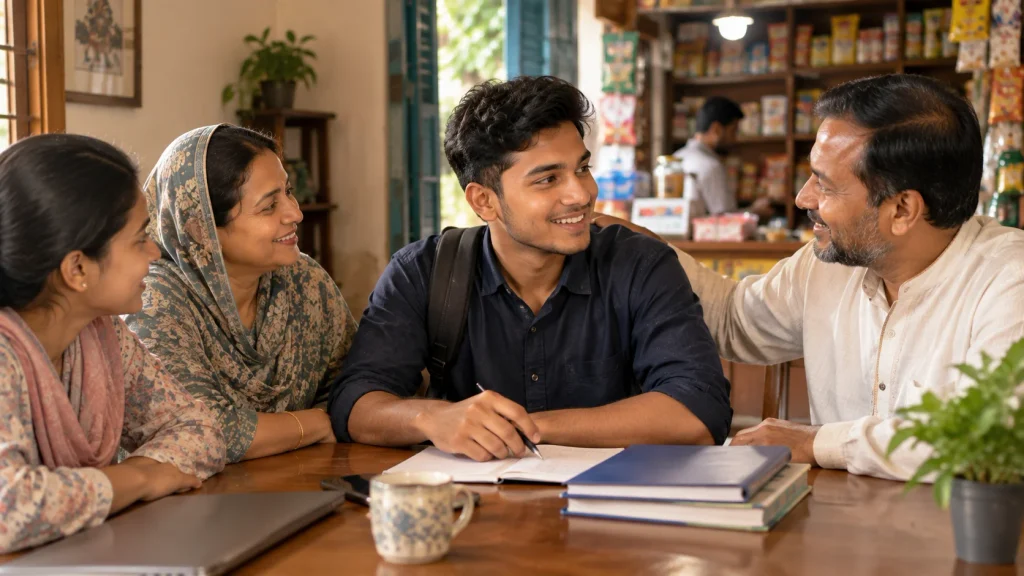
Questions About Your Plans After Graduation
- What will you do once you finish your degree?
- Do you plan to return to Bangladesh?
- Do you have family, property, or a job waiting for you back home?
How to approach these: This is widely considered the single most important question category in the entire F1 Student Visa interview. A generic “I’ll go back and work” sounds rehearsed and unconvincing. A specific plan — a family business you’ll join, an industry in Bangladesh actively hiring people with your future degree, or a tentative offer from a local employer — carries far more weight. Mentioning tangible connections like property, a family business, or close family obligations helps reinforce that you have real reasons to return.
Questions About Your Academic Background
- What did you study before this, and how does it connect to your new program?
- What was your CGPA or academic result?
- Why is there a gap in your education or work history, if any?
How to approach these: Be straightforward. If your results dipped in a particular year, briefly explain the circumstance and move quickly to how you improved afterward — dwelling on it too long draws more attention than it deserves.
How to Handle Follow-Up and Unexpected Questions
Officers sometimes ask something you haven’t rehearsed, partly to see how naturally you respond. A few habits help:
- Answer only what’s asked. Volunteering extra, unrelated information can open doors to questions you weren’t prepared for.
- Pause before answering if you need to. A short pause reads as thoughtful, not as uncertainty.
- Ask for clarification if you don’t understand. It’s far better than guessing and giving an answer that doesn’t match the question.
- Avoid memorized scripts. Officers interview hundreds of students a day and can usually tell when an answer is recited word-for-word rather than genuinely understood.
Why F1 Visas Get Refused — and How to Avoid It
The most common refusal reason for Bangladeshi applicants, by far, is Section 214(b) — essentially, the officer wasn’t convinced you have strong enough ties to Bangladesh and a genuine intent to return after your studies. This isn’t necessarily about paperwork; it’s about how convincing your overall story is.
Typical red flags include:
- Vague or inconsistent answers about post-graduation plans
- Financial documentation that doesn’t clearly cover the full cost of the program
- Large, unexplained lump-sum deposits in bank statements right before the interview
- Choosing a university or program that doesn’t logically connect to prior education or career goals
- Undisclosed prior visa refusals (from the US or any other country) — this must be declared on the DS-160
If you’re refused, the officer will hand back a slip citing the relevant section of law. You can reapply, but doing so without meaningfully addressing the original concern almost always leads to a second refusal. It’s worth strengthening the actual weak point — better financial documentation, a clearer academic rationale, or firmer evidence of ties to Bangladesh — before trying again.
Presentation Matters More Than Students Expect
- Dress conservatively and professionally. A collared shirt and trousers, or a formal salwar kameez or knee-length outfit, signals that you’re taking the process seriously.
- Speak at a measured pace. Rushing through answers under nervousness is common, but clarity leaves a stronger impression than speed.
- Be completely honest. Officers are trained to spot inconsistencies, and any sign of a hidden fact — a previous refusal, an unexplained financial gap — tends to work against you far more than the fact itself would have.
After the F1 Student Visa interview
If approved, your passport is retained for stamping and typically returned within three to five business days at your chosen pickup location — Dhaka, Chittagong, or Sylhet. You can track status through the CEAC case status tool.
If flagged for administrative processing (221(g)), you’ll be told what additional documents are needed. Submit them to your pickup location rather than mailing them directly, and keep your case number on every submission.
If refused, you’ll get an explanation on the spot. Take time to genuinely address the underlying concern before you consider reapplying.
How PEC Education Consultants Can Help You Prepare
Passing the F1 visa interview isn’t just about knowing the right answers — it’s about building a genuinely consistent case before you ever sit in front of a consular officer. This is exactly where PEC Education Consultants works alongside students throughout the entire journey, not just at the interview stage. Our counsellors help you choose a university and program that has a clear, defensible academic rationale, review your financial documentation so it holds up under scrutiny, and guide you through the DS-160, SEVIS, and MRV fee steps so nothing is missed or mismatched.
Closer to your appointment, we run mock interview sessions modeled on real USA embassy Dhaka for visa interview questions, giving you honest feedback on the answers that feel weak or rehearsed. If your case has any complexity — a career change, an academic gap, or a financial structure that needs explaining clearly — our team helps you frame it the right way rather than leaving you to figure it out the night before your interview. Whether you’re just starting to shortlist universities or your visa appointment is already booked, PEC Education’s goal is simple: make sure you walk into that interview room prepared, confident, and with a story that holds together from start to finish.
Call: +8801865 383 786(WhatsApp), Email: [email protected]
Final Thoughts
The F1 Student Visa interview rewards preparation, not performance. Officers aren’t looking for perfect English or a flawless script — they’re checking whether your academic reasons, financial plan, and post-graduation intentions all fit together consistently. Walk in with clear, specific, honest answers, the right documents in hand, and a realistic sense of what happens next, and the two-minute conversation stops feeling like a lottery and starts feeling like a formality you’re genuinely ready for.
Frequently Asked Questions
How long does the F1 Student Visa interview at the US Embassy in Dhaka actually take?
The interview itself is usually just two to three minutes, though the full visit — security, biometrics, and waiting — typically takes two to three hours.
How far in advance can I schedule my F1 Student Visa interview?
You can book an appointment up to a year before your program start date, though the visa itself generally can’t be issued more than 120 days ahead of that date.
What is the current SEVIS fee for Bangladeshi F-1 applicants?
USD 350, paid online at fmjfee.com before you book your interview.
What is the current MRV visa fee?
USD 185, payable in Bangladesh through designated EBL branches or EBL Skybanking.
Can I answer the interview in Bangla instead of English?
Yes. Officers at the Dhaka embassy are able to conduct interviews in Bangla, so you’re welcome to answer in whichever language you’re more comfortable with.
What’s the most common reason F1 visas get rejected for Bangladeshi students?
Failure to convincingly demonstrate ties to Bangladesh and a genuine plan to return after graduation — officially cited under Section 214(b).
Is Bangladesh affected by current US travel restrictions on student visas?
No. Bangladesh has not been placed on any list restricting F-1, M-1, or J-1 visa issuance, and student visa interviews continue on their normal schedule.